Common Idioms
CAUTION: Some use these as their Motto, but you have to understand the real meaning behind it, when to use it, and when not to use it.
Fake it till you make it
- “Act as if you already have it”
- When things can go bad, the Theranos Case
Do things that don’t scale
- Do not create software for eve thing in the beginning. Humans can act as your software until you have enough validation and data that you know exactly what to build.
- Do things that don’t scale by Paul Graham (founder at YCombinator)
There’s a more extreme variant where you don’t just use your software, but are your software. When you only have a small number of users, you can sometimes get away with doing by hand things that you plan to automate later. This lets you launch faster, and when you do finally automate yourself out of the loop, you’ll know exactly what to build because you’ll have muscle memory from doing it yourself. Some startups could be entirely manual at first. If you can find someone with a problem that needs solving and you can solve it manually, go ahead and do that for as long as you can, and then gradually automate the bottlenecks. It would be a little frightening to be solving users’ problems in a way that wasn’t yet automatic, but less frightening than the far more common case of having something automatic that doesn’t yet solve anyone’s problems.
Move fast and break things
- Mark Zuckerberg said it in an interview with Business Insider in 2009
- He also said, “Unless you are breaking stuff, you are not moving fast enough”
- Facebook used this a lot until 2014
- This is very true when you are creating a new product because you want to learn fast and the best way to do that is to ship fast and learn from it. If you pay attention to every detail in the beginning you won’t be focusing on the real end game which is the validation of your hypothesis (not only in the Discovery process but also in real life)
References
Recommended Books
|
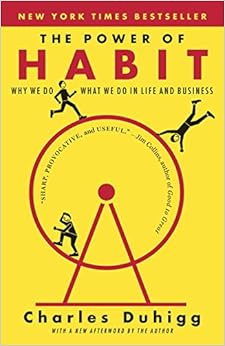
The Power of Habit - by Charles Duhigg Why We Do What We Do in Life and Business 
|
|
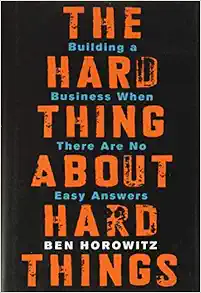
The Hard Thing About the Hard Things - by Ben Horowitz Building a Business When There Are No Easy Answers
|
|
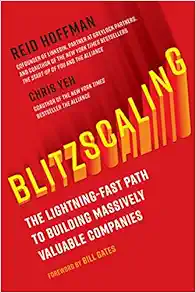
Blitzscaling - by Reid Hoffman (founder of Linkedin) The Lightning-Fast Path to Building Massively Valuable Companies
|
|
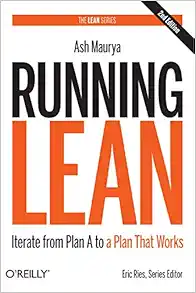
Running Lean - by Ash Maurya Iterate from Plan A to a Plan That Works Original Version Launch Year: 2010
|
|
Key takeaways |
|

|
The Lean Startup - by Eric Ries How Today’s Entrepreneurs Use Continuous Innovation to Create Radically Successful Businesses Original Version Launch Year: 2008
|
|
Key takeaways |
|

|
Business Model Generation - by Alexander Osterwalder A Handbook for Visionaries, Game Changers, and Challengers Original Version Launch Year: 2008
|
|
Key takeaways |
|
|
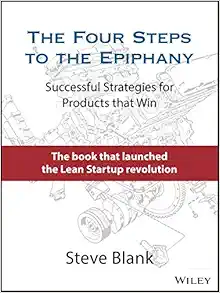
The Four Steps to the Epiphany - by Steve Blank Successful Strategies for Products that Win Original Version Launch Year: 2005
|
|
Key takeaways |
|
