Stock Options
Stock Options Plan
A stock option plan is a type of employee benefit that allows employees to purchase company stock at a discounted price. The company sets aside a certain number of shares to be issued to employees at a future date, at a price that is typically lower than the current market price.
For example, a company might set up an option plan that allows employees to purchase shares at 20 dollars, even if the current market price is 30 dollars. If the employee decides to exercise their option and purchase the shares, they would pay $20 per share, and could then sell the shares on the open market for a profit.
It is important to note that stock options plans have expiration date, and if the employee does not exercise their options before the expiration date, they will lose the opportunity to purchase the shares at the discounted price.
Types of Stock Options
There are two types of stock options:
- Incentive Stock Options (ISOs): only available to employees and have favorable tax treatment;
- Non-qualified Stock Options (NSOs): available to anyone and do not have the same tax benefits.
Vesting
Vesting refers to the process by which an employee earns the right to exercise their stock options over time. In other words, it is a way for the company to ensure that employees are incentivized to stay with the company for a certain period of time before they can fully take advantage of their stock options.
For example, a company might set up a vesting schedule that allows an employee to exercise 25% of their options after one year of employment, 50% after two years, and the remaining 25% after three years. This means that if an employee leaves the company before their options are fully vested, they will forfeit any unvested options.
There are different vesting schedules. Some companies use a “cliff vesting” schedule, where options vest all at once after a certain period of time, while others use a “graded vesting” schedule, where options vest gradually over time.
Vesting schedules help to align the interests of the employee with those of the company. When an employee’s stock options are fully vested, they have an incentive to help the company grow and increase the value of the stock so they can maximize the value of their stock options.
Content of a Stock Option Plan
General information about what a Stock Option Plan should include:
- Eligibility: This section should specify which employees are eligible to participate in the plan, such as full-time employees, key managers, or directors.
- Number of shares: This section should specify the total number of shares that will be reserved for the plan, and how they will be allocated among eligible employees.
- Exercise price: This section should specify the price at which employees can purchase the shares. This price is typically set at a discount to the current market price.
- Vesting schedule: This section should specify how long employees must work at the company before they can fully exercise their options.
- Expiration date: This section should specify when the options will expire and can no longer be exercised.
- Transferability: This section should specify any restrictions on the transferability of the options.
- Corporate events: This section should specify how the options will be treated in the event of a merger, acquisition, or other corporate event.
It is important to note that Stock Option Plan should be reviewed and approved by legal and financial professionals before implementation, as it may have legal and financial implication.
Protective Measures
When building a stock option plan, companies need to take a number of protective measures to ensure that the plan is fair and equitable for all parties involved. Some of these measures include:
- Compliance with legal and regulatory requirements: Companies need to ensure that their stock option plan is in compliance with all applicable laws and regulations, such as securities laws and tax laws.
- Board approval: Stock option plans should be reviewed and approved by the company’s board of directors to ensure that they are in the best interests of the company and its shareholders.
- Shareholder approval: Some companies may also need to obtain shareholder approval for their stock option plan, particularly if they are going to issue a significant number of new shares.
- Fairness Opinion: Companies may also engage independent financial advisors to provide a fairness opinion on the terms of the stock option plan and the exercise price to ensure that the terms are fair to shareholders.
- Clawback provisions: Companies may include clawback provisions in their stock option plans, which would allow them to recover any options that have been exercised in the event of misconduct or other negative events.
- Limit on the number of shares: Companies may also limit the number of shares that can be issued under the plan to a certain percentage of the company’s outstanding shares to prevent dilution of the existing shareholders.
- Annual review: Companies should review the terms of the stock option plan on an annual basis to ensure that it still serves the company’s needs and goals.
- Communication to employees: Companies should clearly communicate the terms of the stock option plan to all eligible employees, as well as the rules and procedures for exercising options, vesting, and selling shares.
References
Recommended Books

|
Blitzscaling - by Reid Hoffman The Lightning-Fast Path to Building Massively Valuable Companies 
|
|
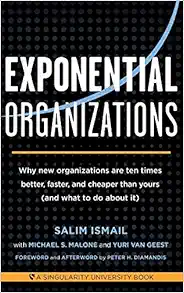
Exponential Organizations - by Salim Ismail Why new organizations are ten times better, faster, and cheaper than yours (and what to do about it)
|

|
Measure What Matters - by John Doerr How Google, Bono, and the Gates Foundation Rock the World with OKRs
|
